How to Decorate a Small Living Room: 12 Ideas
How to decorate a small living room without renovating: measure first, choose light colors, size the sofa and rug, add storage and layer the lighting.
A small living room isn’t a decorating problem. It’s a decision problem. When every square foot counts, each piece of furniture, color and object carries more weight, so it pays to choose deliberately instead of filling gaps. The good news is that almost everything that changes a small living room most can be done without renovating: with measurements, visual order, light and a handful of well-chosen pieces.
Here are twelve ideas that work in apartments, condos and houses, in roughly the order it makes sense to apply them.
1. Measure before you buy anything
Sketch a simple floor plan on paper or in a spreadsheet: the room’s length and width, plus the position of doors, windows, outlets, radiators or vents, and which way doors swing. Note window heights and the distance from the floor to the sill.
With that plan you can check whether a sofa really fits, how much walking room is left and which wall can hold a bookshelf. It is the dullest step and the one that prevents the most expensive mistakes. Many people find it helpful to tape the footprint of a sofa on the floor and live with it for a day.
2. Decide what the room is for
You can’t fit everything in a small room. Pick the three uses that matter most: watching TV, hosting friends, working a few hours, reading, eating. Anything lower on the list gets solved another way (a folding table, a stowable ottoman, a desk in another room) or dropped.
3. Choose a light, warm base color
Light colors reflect more light, which makes a small room feel more open. Warm whites, creams, sand and soft greige tend to work better than stark white, which can read cold and flat. If your room has strong natural light, you can go deeper; if it is dim, stay light and add warmth through textiles and lamps. Our guide to paint colors for a living room goes into this in more detail.
4. Size the sofa to the room
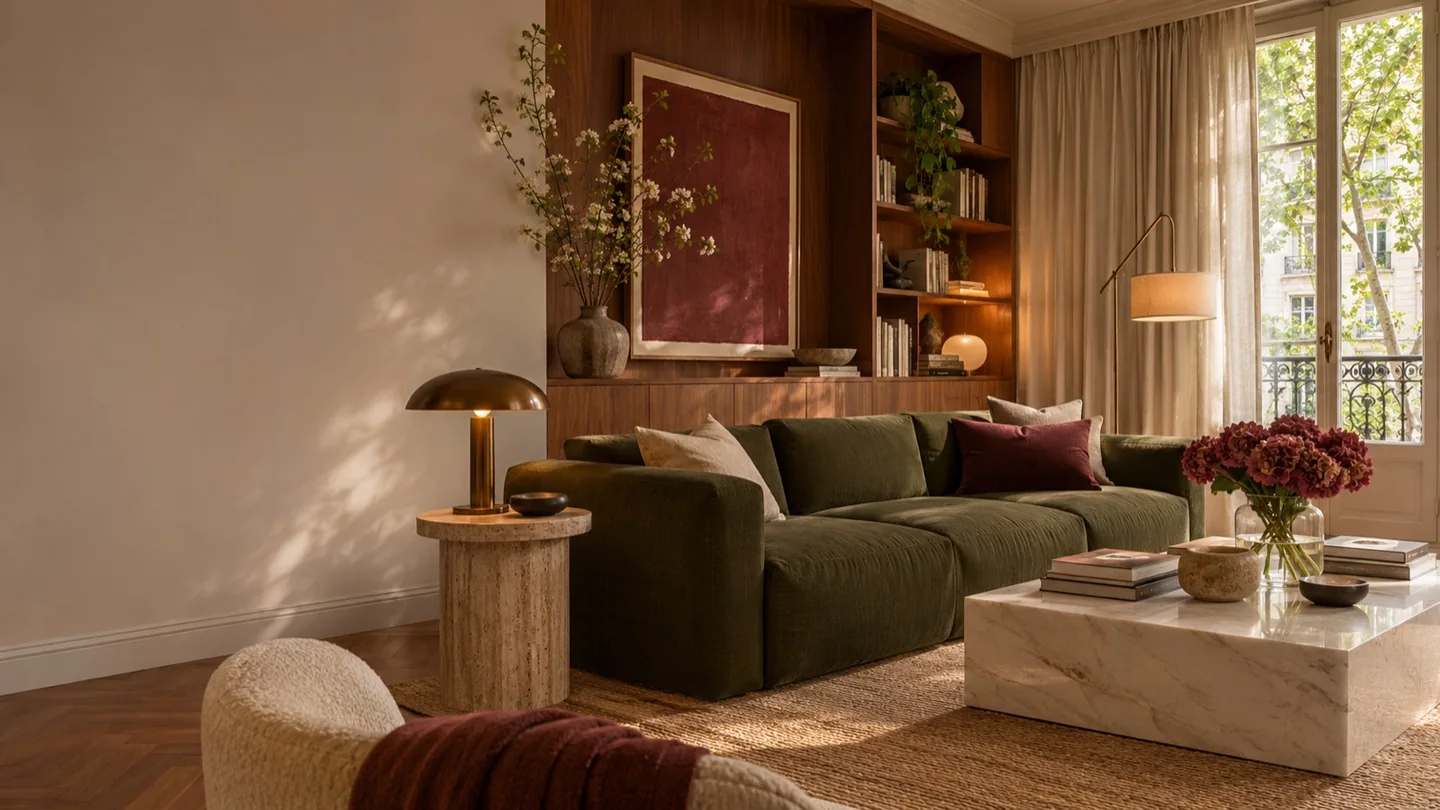
The sofa sets the scale for everything else. In a small room, look for a compact sofa or loveseat with slim arms, a lower back and visible legs. Seeing the floor underneath makes the piece feel lighter. Rather than pushing it flush against every wall, leave a little breathing room where you can, and check the walking path is at least about 30 inches (75 cm) wide.
5. Pick the right rug size
A rug that is too small makes a room feel choppy. Ideally the front legs of the sofa and chairs sit on the rug, which ties the seating area together. In a small room that often means a 5 by 8 ft (about 1.5 by 2.4 m) or 6 by 9 ft (about 1.8 by 2.7 m) rug, depending on your layout. A low-pile, light or tone-on-tone rug keeps things calm.
6. Go for furniture that shows its legs and its light
Open frames, slim profiles and a mix of solid and see-through pieces (a glass or thin-framed side table, a chair with an airy back) keep a small room from feeling heavy. Avoid a bulky coffee table: a round or oval one is easier to move around, and a pair of nesting tables lets you add surface only when you need it.
7. Build storage up, not out
Floor space is precious, wall height is not. Use a tall, narrow bookshelf, wall-mounted shelves where your lease allows it, or a media console with closed storage so clutter stays out of sight. Pieces that double as storage, like an ottoman or a bench with a lid, earn their place. Keep a few open shelves for things you love and hide the rest.
8. Layer your lighting
A single ceiling fixture flattens a room. Add at least two other sources at different heights: a floor lamp in a corner and a table lamp on a side table or shelf. Warm bulbs (around 2700 to 3000 K) make a small room feel cozy. Plug-in wall sconces and plug-in dimmers are renter-friendly ways to get the same effect without an electrician.
9. Use mirrors and curtains to stretch the space
A large mirror opposite or beside a window bounces light around and adds depth. Hang curtains close to the ceiling and wide enough that they clear the glass when open: it draws the eye up and lets the window look bigger. Pick fabrics that filter light, not heavy ones that swallow it.
10. Keep the palette short
Three to five colors, including neutrals, are plenty. A common approach is the 60-30-10 rule: about 60 percent a main color, 30 percent a secondary one and 10 percent an accent. A short palette makes a small room look calmer and more intentional.
11. Zone an open-plan living/dining room
If your living room shares space with a dining area, give each zone its own anchor: a rug under the sofa, a pendant or lamp over the table, a console or low shelf as a soft divider. You don’t need walls, just clear visual edges so each area feels like a place with a purpose.
12. Edit what’s on display
Fewer, larger objects look better than many small ones. Group items in odd numbers, leave some surfaces empty and rotate decor with the seasons rather than showing everything at once. A calm surface is the cheapest way to make a small room feel bigger.
A simple order of operations
If you are not sure where to begin, this sequence tends to give the most improvement for the least money: measure and edit, fix the lighting, add a properly sized rug and textiles, then replace the biggest pieces last. That way you spend on furniture only after you know what the room needs. If you’d like someone to look at your room with you, a virtual interior design consultation is built for exactly this. And if you live in a studio, our guide to studio apartment decorating ideas covers zoning a single room that has to do everything.